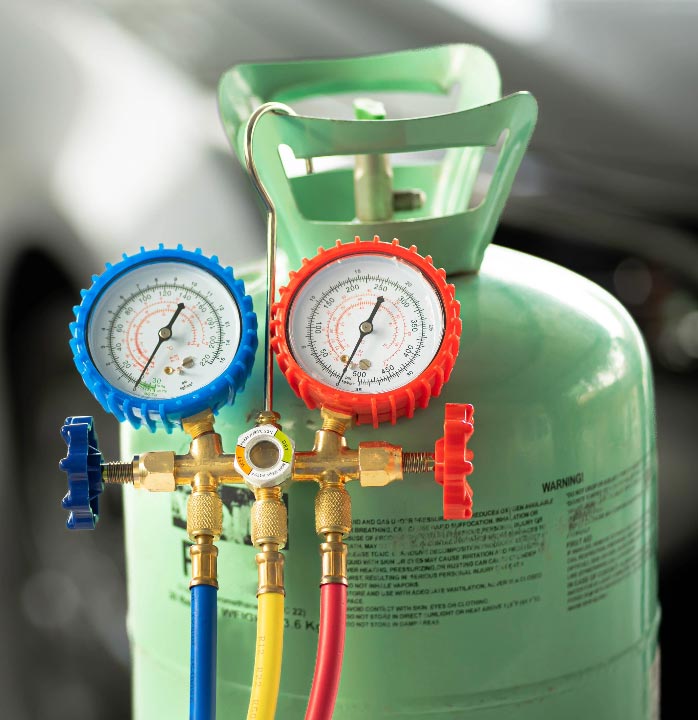
Planning a commercial HVAC equipment replacement this fall or winter? The refrigerant used in your next system is an important factor to consider alongside equipment cost, energy efficiency, serviceability, and long-term operating expenses.
R-410A has been widely used in commercial air conditioning and heat pump equipment. R-32 and R-454B are alternatives used in newer equipment designs, offering lower global warming potential than R-410A.
For commercial property owners, facility managers, building engineers, and mechanical contractors, choosing between these refrigerants involves more than comparing specifications. Equipment availability, installation requirements, system compatibility, and access to qualified service professionals all influence the decision.
At Refrigerant Services LLC, understanding refrigerant options can help commercial buyers make informed decisions about equipment purchases, replacements, and ongoing HVAC maintenance.
Here’s what to consider when comparing R-410A, R-32, and R-454B in 2026.
R-410A vs. R-32 vs. R-454B: At a Glance
| Feature | R-410A | R-32 | R-454B |
|---|---|---|---|
| Refrigerant type | HFC blend | Single-component HFC | HFC/HFO blend |
| Approximate global warming potential (GWP) | 2,088 | 675 | 466 |
| ASHRAE safety classification | A1 | A2L | A2L |
| Relative flammability classification | No flame propagation under standard classification testing | Mildly flammable | Mildly flammable |
| Common equipment context | Established HVAC equipment | Newer, purpose-designed equipment | Newer, purpose-designed equipment |
| Compatible with an R-410A system as a direct replacement? | Yes, when specified for that system | No | No |
GWP values are commonly cited figures; published values may vary by assessment methodology. Equipment compatibility must always be confirmed against manufacturer specifications.
The key distinction is that R-410A, R-32, and R-454B have different properties and equipment requirements. Neither R-32 nor R-454B should be treated as a universal replacement for R-410A in existing systems.
1. R-410A: An Established Option for Existing Equipment
R-410A has been used extensively in air conditioning systems and heat pumps. Many commercial buildings continue to operate equipment designed around this refrigerant, and HVAC professionals have substantial experience servicing these systems.
Potential advantages
- Established service experience: Many commercial HVAC technicians are familiar with R-410A equipment and its service requirements.
- Existing equipment support: Businesses with functioning R-410A systems may be able to continue maintaining them, depending on equipment condition and parts availability.
- Familiar maintenance practices: Facility teams may already have maintenance procedures, service records, and contractor relationships built around their existing systems.
Considerations for commercial buyers
The suitability of keeping or replacing an R-410A system depends on its age, condition, performance, and repair history.
Refrigerant and replacement-component availability can vary, as can service costs. Buyers should obtain current information from their HVAC contractor or supplier rather than assume that pricing and availability will remain constant.
For a commercial facility, the decision to replace equipment should also account for energy consumption, reliability, downtime risk, and the cost of maintaining the system over time.
When does R-410A make sense?
If your building has an existing R-410A system that continues to operate reliably, maintaining it may be a reasonable option.
If you’re considering purchasing replacement equipment, evaluate the specific unit, its suitability for your application, its installation eligibility, warranty terms, and expected service support before making a decision.
2. R-32: A Lower-GWP Refrigerant for New Equipment
R-32 is a single-component refrigerant used in air conditioning and heat pump equipment. It has a lower global warming potential than R-410A and is used in purpose-designed HVAC systems.
Potential advantages
- Lower global warming potential: R-32 has a commonly cited GWP of approximately 675, compared with approximately 2,088 for R-410A.
- Single-component composition: R-32 consists of one refrigerant component rather than a blend.
- Purpose-designed system performance: Manufacturers can engineer equipment around R-32’s properties to meet the intended capacity and efficiency requirements.
Considerations for commercial buyers
R-32 is classified as A2L, meaning it has lower toxicity and mild flammability under the applicable refrigerant safety classification system. Equipment design, installation, and servicing must account for those properties.
Availability also depends on the manufacturer, equipment category, capacity, and local supply chain. Not every commercial HVAC application will have an R-32 option that meets its technical requirements.
When should commercial buyers consider R-32?
R-32 is worth evaluating when suitable equipment is available for your building and the system meets your operational requirements.
Compare the complete equipment package, including capacity, efficiency, controls, installation costs, warranty coverage, and service support. The refrigerant’s GWP is one consideration, not a substitute for evaluating the system as a whole.
3. R-454B: Another Lower-GWP Alternative
R-454B is a refrigerant blend containing R-32 and R-1234yf. It is used in purpose-designed HVAC equipment as an alternative to R-410A.
Its commonly cited GWP is approximately 466, lower than both R-410A and R-32.
Potential advantages
- Lower global warming potential: R-454B has a substantially lower GWP than R-410A.
- Purpose-designed equipment options: Manufacturers offer R-454B equipment for selected HVAC applications.
- A potential fit for replacement projects: Where compatible equipment is available, R-454B can be evaluated alongside other systems that meet a building’s capacity and performance requirements.
Considerations for commercial buyers
Like R-32, R-454B is classified as A2L. Equipment and service procedures must be appropriate for its safety classification and manufacturer requirements.
R-454B equipment is not interchangeable with R-410A equipment simply because the refrigerants serve similar applications. Buyers need to confirm that the proposed equipment, components, and installation meet the manufacturer’s specifications.
When does R-454B make sense?
R-454B may be a strong candidate when a manufacturer offers a suitable system for the project.
Compare it with available R-32 equipment based on total installed cost, energy performance, equipment availability, warranty coverage, and long-term serviceability. The lower GWP is a useful differentiator, but the best system depends on the building and application.
4. How Do Cost and Availability Compare?
For commercial buyers, the practical question isn’t just which refrigerant costs less. It’s which compatible HVAC system provides the best overall value for the building.
There is no universal price ranking for R-410A, R-32, and R-454B equipment. Costs vary with manufacturer, equipment capacity, system design, supplier inventory, labor, and project requirements.
Initial equipment and installation costs
The refrigerant alone does not determine the installed price. Equipment selection, controls, electrical work, piping, commissioning, and labor can all affect the project budget.
When comparing R-32 and R-454B systems, request quotes for equipment with comparable capacity and performance. Ask your contractor to identify any differences in installation requirements, controls, or other materials that affect the final cost.
For an existing R-410A system, compare the estimated cost of continued maintenance with the cost of replacement. Include the potential financial impact of unexpected failures and operational downtime.
Refrigerant and repair costs
Refrigerant prices can change over time and vary by supplier. Service costs also depend on the amount of refrigerant required, the type of repair, labor, parts, and whether a leak or another underlying problem needs to be addressed.
Rather than relying on broad assumptions about which refrigerant is cheapest, request current pricing from your supplier or HVAC service provider.
For facilities with multiple HVAC systems, reviewing maintenance history and recurring repair costs can help identify where a planned replacement may be more practical than continued repairs.
Equipment availability in fall and winter 2026
Availability varies by equipment manufacturer, product line, capacity, supplier, and location. The best refrigerant choice on paper may not be the best choice for a project with a strict installation deadline if suitable equipment cannot be obtained in time.
Before approving a purchase, confirm:
- Which compatible models are currently available.
- Whether equipment is in stock or must be ordered.
- Expected delivery and installation timelines.
- Availability of replacement parts and qualified service providers.
- Manufacturer warranty terms and service requirements.
- Whether the proposed equipment meets the requirements applicable to your specific project.
Practical tip: Start planning equipment replacements before a system reaches the point of failure. Advance planning gives facility managers more time to evaluate options, coordinate contractors, and reduce the risk of rushed decisions.
5. Compatibility: Can R-410A Equipment Use R-32 or R-454B?
This is one of the most important questions to resolve before purchasing replacement equipment.
R-32 and R-454B are not drop-in replacements for R-410A. An existing R-410A system should not simply be charged with either alternative refrigerant.
The refrigerants have different properties, and HVAC equipment is engineered for a specified refrigerant. Compressors, controls, heat exchangers, refrigerant detection features, and other components must be suitable for the refrigerant and the system design.
In many replacement projects, switching from an R-410A system to R-32 or R-454B means installing equipment specifically designed for the selected refrigerant.
However, a refrigerant change does not automatically mean every part of the building’s HVAC infrastructure must be replaced. Existing ductwork, electrical infrastructure, controls, or other components may be reusable, depending on their condition and compatibility.
A qualified HVAC professional should evaluate the existing installation and verify the manufacturer’s requirements before the project moves forward.
Questions to ask before approving a replacement
- Can the existing ductwork and air distribution system be retained?
- Will existing refrigerant piping need to be replaced or modified?
- Are the electrical connections and controls compatible with the new equipment?
- What installation and safety requirements apply to the proposed system?
- Will the equipment integrate with the building automation system?
- Are replacement parts and qualified service support readily available?
Resolving these questions early can help prevent unexpected costs and delays.
6. What Commercial Buyers Should Know About A2L Refrigerants
Both R-32 and R-454B are classified as A2L refrigerants. This classification indicates lower toxicity and lower flammability under the applicable safety standards.
A2L refrigerants require appropriate handling and installation practices. The specific requirements depend on the equipment, refrigerant charge, installation environment, manufacturer instructions, and applicable codes and standards.
For commercial facilities, the goal is to select equipment that meets the building’s operational needs while ensuring the installation and maintenance procedures are appropriate for the refrigerant.
Before purchasing a system, confirm that:
- The equipment is designed for the selected refrigerant.
- The installing contractor is qualified to work with the equipment and refrigerant.
- Required safety features and installation provisions are addressed.
- The facility’s maintenance team understands the equipment’s service requirements.
- Manufacturer instructions and applicable codes and standards will be followed.
The refrigerant should never be changed or substituted without confirming that the equipment is specifically designed and approved for that application.
7. How to Choose the Right Refrigerant for Your Commercial Building
The right decision depends on the building, the equipment being considered, and the business’s operational priorities.
If you’re maintaining an existing R-410A system
Start with an assessment of its condition, performance, maintenance history, and expected remaining service life. Compare the cost and risks of continued maintenance with a planned replacement.
A functioning system does not necessarily need immediate replacement simply because newer refrigerants are available.
If you’re purchasing new HVAC equipment
Compare suitable R-32 and R-454B systems based on total installed cost, energy performance, capacity, manufacturer support, and serviceability.
Select equipment that meets the building’s heating and cooling demands rather than choosing based on refrigerant specifications alone.
If your project has a tight schedule
Confirm equipment availability, delivery dates, and installation requirements before committing to a system.
Coordinate with your contractor and supplier early enough to account for equipment lead times, project sequencing, and commissioning.
If you manage a large or multi-building facility
Consider the broader operational impact of your equipment decisions. Energy consumption, maintenance requirements, system reliability, controls integration, and downtime risk can have a significant effect on total ownership costs.
A professional HVAC assessment can help identify the most appropriate replacement strategy for individual systems or an entire portfolio.
Make an Informed HVAC Refrigerant Decision With Refrigerant Services LLC
Choosing between R-410A, R-32, and R-454B requires more than comparing GWP figures. Commercial buyers need to consider equipment compatibility, installed cost, availability, energy performance, maintenance requirements, and long-term service support.
Whether you’re planning a commercial HVAC replacement, evaluating new equipment, or maintaining an existing system, understanding these differences can help you make a more informed purchasing decision.
Refrigerant Services LLC encourages commercial buyers to evaluate the complete HVAC system and confirm current equipment and refrigerant requirements with qualified suppliers and HVAC professionals.
Planning a commercial HVAC equipment purchase for fall or winter 2026? Contact Refrigerant Services LLC to discuss your refrigerant needs and determine which considerations matter most for your application.
Call us: 1-844-PURECFC
Visit: www.refrigerantservicesllc.com